


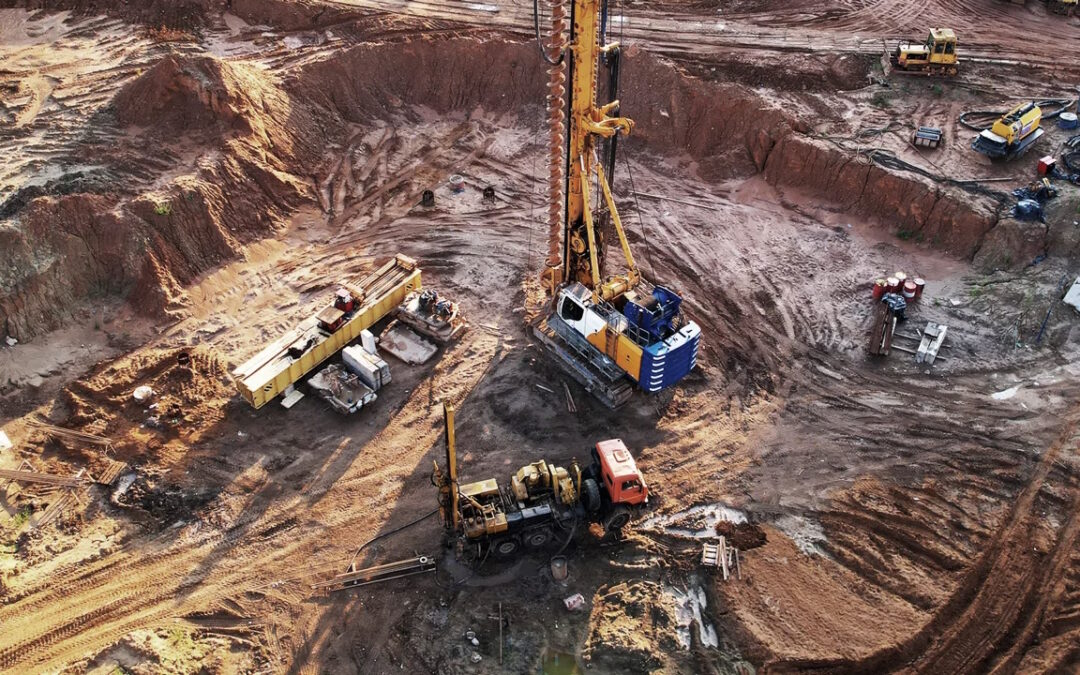
Piles are vital structural components in construction, often made of steel or reinforced concrete columns that penetrate the ground. They are designed to support heavy loads and transfer them to deeper, more stable layers of soil, ensuring the integrity and stability of the structure.
Typically, piles are required in situations where the surface soil is too weak or unstable to support the weight of a building. This is common in areas with loose, soft, or highly compressible soils. However, before piles can be implemented, they must undergo testing to verify their load-bearing abilities, which is where pile testing comes in.
Read on to learn more about the importance of pile testing, how it’s performed, and why it’s essential for ensuring stable and reliable foundation support in construction.
What Is Pile Testing?
Pile testing is the process of assessing the performance and characteristics of piles in foundation systems. These tests involve subjecting the piles to a range of conditions to evaluate their structural integrity and understand how they will react to various loads. This process is essential for determining the pile’s load-bearing capacity and ensuring its effectiveness in supporting the structure.
By conducting pile testing, piling contractors can ensure that the piling foundation system is safe and reliable and the building will remain structurally sound when completed.
Why Is Pile Testing Needed?
Pile testing is a necessary procedure in any construction project where piling foundations are needed, ensuring that the pile will adequately support the intended structure.
Given that piles are hidden below the ground during construction, any potential flaws or defects that could compromise the foundation’s structural integrity may go unnoticed. If pile testing is not performed, structural integrity issues stemming from pile irregularities may remain undetected.
Conducting pile testing prior to construction ensures any issues are identified and addressed, preventing any unforeseen problems further down the road.
Common Pile Testing Methods
There are several pile testing services that piling contractors may perform depending on the type of build and the results you are looking for.
Pile Integrity Testing
Pile integrity testing is a quick and highly cost-effective method used to assess the condition of the piles or shafts in a structure. Tools such as Sonic Echo or Transient Dynamic Response are used to detect any potential issues with the integrity of piles, such as defects or discrepancies.
Dynamic Load Testing
Dynamic load testing involves applying a repeated force to the pile head while measuring acceleration and strain to understand how it responds to dynamic forces and motions. This form of pile test can be applied to all pile types.
Static Load Testing
Static load testing is used to check the pile’s ability to bear load by applying a constant load to the pile slowly. Automated testing systems are used to measure displacement caused by the force, enhancing the accuracy of the results gathered.
Piling Contractors in Bristol
At Belowground, we offer comprehensive piling services for all types of foundation construction. As trusted piling contractors in Bristol, we specialise in pile installation and pile testing to ensure stability and strength. Our expert team guarantees safe, reliable foundations, whether for residential or commercial construction projects.
Contact us today and let us help you with the foundation construction of your build.